What is a TPO roof?
TPO stands for thermoplastic polyolefin. It's a single-ply membrane, which means the waterproofing is one layer of tough, flexible sheet instead of several layers built up on site. "Thermoplastic" is the important part: heat softens it, so two pieces of TPO can be welded into one. A TPO roof usually has four parts:
- The membrane. A flexible sheet, most often white, that comes in large rolls, so there are fewer seams across the roof.
- Heat-welded seams. Where sheets overlap, the edges are fused with hot air. The seam becomes one piece of material instead of relying on glue or tape.
- Insulation underneath. TPO is commonly installed over rigid insulation board, which adds insulation and gives the membrane a smooth, even base.
- Flashing and details. Matching membrane is welded around walls, curbs, pipes, drains and edges, which are the spots where flat roofs most often leak.
Why TPO works for Bakersfield buildings
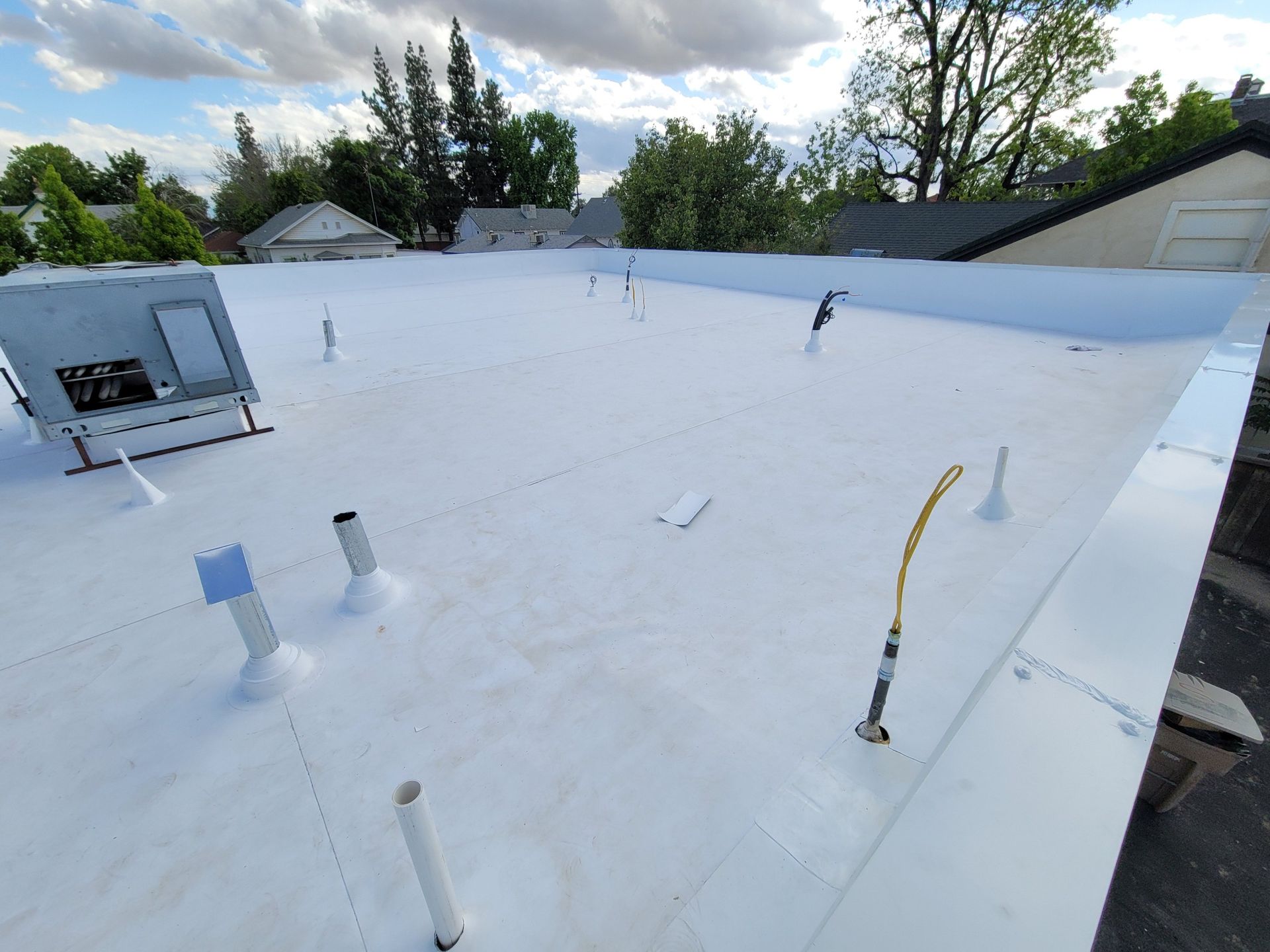
- It reflects the heat. A white TPO roof reflects much of the sunlight that makes a dark roof so hot, which can help keep the building below cooler through our long summers.
- The seams are fused. Seams are the weak spot on a lot of flat roofs. Welded TPO seams don't depend on adhesive that dries out in the heat.
- It's easy to keep an eye on. The smooth, light surface makes damage easy to spot when the roof gets checked.
- It fits California's energy rules. White TPO is one of the roof options used where California's Title 24 energy code calls for a reflective "cool roof." We pull the permits for our jobs and follow the cool-roof (Title 24) requirements that apply to your project. See Title 24 cool roofs.
Getting the most from a TPO roof
A few things make a good TPO roof a great one:
- Careful details. The welds, corners, curbs and edges are where installation care shows, and it's where we spend our time.
- Good drainage. TPO sheds water well when water can reach the drains. If your roof ponds today, we build the fix into the plan.
- A plan for rooftop service areas. We talk through the spots service techs use most around your rooftop units.
- The right insulation. TPO goes over rigid insulation board, so you choose how much insulation the building gets.
TPO or spray foam?
We install both, so we have no reason to push one over the other. Here's how the choice usually breaks down.
TPO is often a good fit when:
- The old roof is coming off anyway, and you want a new membrane on a clean deck.
- The roof is large and fairly simple, with long open runs, like many warehouses.
- You want a membrane roof with welded seams and a bright white finish.
Spray foam is often a good fit when:
- The existing roof can stay in place and be foamed over, avoiding a tear-off.
- The building needs more insulation on top.
- The roof is crowded with pipes, vents and odd shapes that are easier to seal with one seamless layer.
- It's an old metal roof. See spray foam over metal roofs.
We'll look at the building and explain which one makes more sense for your roof and your budget. Learn more about spray foam roofing.
New TPO roofs, replacements and recovers
TPO is used for full replacements, where the old roof comes off down to the deck. It can sometimes go over the existing roof instead, depending on how many layers the roof already has. We inspect the roof first to see what's going on before we recommend it. Wet or damaged material has to come out either way. See commercial roof replacement and commercial reroofing for how those options compare. Wondering whether to recover or tear off? Read roof replacement vs overlay, or our TPO roofing guide on lifespan, heat and repair.
Buildings that often use TPO
- Warehouses & distribution buildings, like the big ones on the north side of Bakersfield and out toward Shafter
- Retail stores & shopping centers
- Office and medical buildings
- Light industrial buildings and shops
TPO roof repair
We install TPO roofs and we repair them, including seams, punctures and flashing. Typical repairs include re-welding a seam, patching a spot where a dropped tool or storm debris hit the roof, and re-flashing at walls, curbs and edges. Because TPO is heat-welded, a damaged spot can often be patched by welding new membrane over it, as long as the sheet around it is still in good shape. If your TPO roof is leaking, see commercial roof repair.
How a TPO roof project works
- Call or send a request. Tell us about the building, the roof size if you know it, and what's going on.
- Roof evaluation. We check the existing roof, how water drains and what's up there: units, vents, skylights and drains.
- Written, itemized estimate. Tear-off or recover, insulation, membrane, flashing details and the price, line by line. We pull the permits for the job.
- Scheduling around your business. We can work around your business hours and on occupied buildings.
- Installation. Old roofing comes off where needed, insulation and membrane go down, seams are welded and details are flashed.
- Finished roof, with warranty. Warranty length depends on the roof system, typically 20 years.
TPO roofing FAQ
How long does a TPO roof last?
It depends on the membrane, how well it was installed, how the roof drains and how much foot traffic it gets. Warranty length depends on the roof system, typically 20 years, and we'll explain the warranty for your roof in your estimate.
Is TPO good for Bakersfield heat?
Yes, it's a common choice for hot climates. The white membrane reflects much of the sun's heat instead of absorbing it, which helps keep the roof surface and the building below cooler.
What's the difference between TPO and spray foam?
TPO is a sheet membrane with heat-welded seams, usually installed over insulation board. Spray foam is sprayed on as a liquid, expands into one seamless insulating layer and is finished with a coating. Foam can often go over an existing roof, while TPO is often installed after a tear-off. We install both and will tell you which fits your building.
Can TPO go over my existing roof?
Sometimes. It depends on how many layers the roof already has. We inspect the roof first to see what's going on before we recommend it, and any wet or damaged material has to be removed.
Can a TPO roof help meet Title 24 cool roof rules?
White TPO is one of the roof options used where California's Title 24 energy code calls for a cool roof. Whether the rules apply depends on your building and the scope of work, and that's confirmed during permitting. We follow the cool-roof requirements that apply to your project.
Can you install TPO while my business is open?
Yes. We can schedule the work around your business hours and on occupied buildings, and we'll plan the job with you ahead of time.
How much does a TPO roof cost?
It depends on the roof size, whether the old roof comes off, the insulation needed, and how many units, drains and other details are on the roof. We give free written, itemized estimates. Call (661) 213-2203.
Get a free TPO roofing estimate
Tell us about your building and your roof, and we'll get back to you to set up a time to take a look.
Serving all of Kern County and nearby areas, plus larger projects elsewhere in California. From our Bakersfield office at 6321 Almond Dr, we cover the whole county, including Bakersfield, Oildale, Shafter, Wasco, Delano, McFarland, Arvin, Lamont, Tehachapi, Taft, Frazier Park, Lake Isabella, California City, Ridgecrest and Buttonwillow. Call (661) 213-2203 to ask about your location. See all service areas.
Office hours are 8 a.m. to 5 p.m., seven days a week, and someone is on call after hours, so you can call anytime.
Pioneer Roofing · 6321 Almond Dr, Bakersfield, CA 93308 · (661) 213-2203 · 8 a.m.–5 p.m. daily (Mon–Sun), on call after hours · Pioneer Roofing · Licensed & Insured · CA License #976470
Related: Commercial roofing · Spray foam roofing · Commercial roof repair · Roof coatings · Commercial roof replacement · Commercial reroofing