Roof Replacement vs Overlay in Bakersfield: Which Saves?
If your commercial roof is aging or leaking, you’re likely deciding between a full roof replacement or a roof overlay (re-cover). While an overlay may seem cheaper upfront, the real question is:
Which option actually saves you more money long-term?
In Bakersfield’s extreme heat and UV exposure, the answer isn’t always obvious.
What Is a Roof Overlay?
A
involves installing a new roofing system directly over your existing roof without removing the old materials.
Benefits of an Overlay
Lower upfront cost
Faster installation (minimal disruption)
Less labor and disposal fees
In fact, overlays can cost 25–40% less than full replacement initially.
What Is a Full Roof Replacement?
A roof replacement involves tearing off the entire existing roof down to the deck and installing a completely new system.
What’s Included
Full tear-off
Deck inspection and repairs
New insulation and membrane
Updated flashing and drainage
This process ensures your roof is completely reset from the structure up.
Cost Comparison: Short-Term vs Long-Term
FactorRoof OverlayRoof ReplacementUpfront CostLowerHigherLifespan10–15 years20–30+ yearsInstallation TimeFasterLongerRepairs NeededMore frequentLess frequentLong-Term ValueLowerHigher
While overlays are cheaper upfront, they typically last half as long as a full replacement.
That means you may end up paying more over time if you need another roof sooner.
The Hidden Costs of Roof Overlays
Many property owners choose overlays to save money—but overlook the risks:
1. Hidden Damage Stays Hidden
Overlays don’t address:
Trapped moisture
Rotting insulation
Structural issues
These problems can worsen and lead to expensive repairs later.
2. Shorter Lifespan
Overlay systems typically last 10–15 years, compared to 20–30+ years for replacements.
3. Code Limitations
Most building codes (including California) only allow:
Maximum of 2 roofing layers
If your building already has two layers, a replacement is required.
4. Reduced Energy Efficiency
Older insulation stays in place, which can:
Increase cooling costs
Reduce energy performance
This is especially important in Bakersfield’s 100°F+ summers.
When a Roof Overlay Makes Sense
An overlay can be a smart option if:
Your existing roof is in good condition
There’s no moisture trapped underneath
You need a lower upfront investment
You want a short-term solution (10–15 years)
When a Roof Replacement Is the Better Investment
A full replacement is usually the better long-term choice if:
Your roof is over 15–20 years old
There are leaks or water damage
You want maximum lifespan and ROI
Energy efficiency is a priority
Replacement systems also come with longer warranties and fewer maintenance issues.
Bakersfield Factor: Why Climate Changes Everything
In Bakersfield, your roof deals with:
Extreme UV exposure
High temperatures
Thermal expansion and cracking
These conditions accelerate wear, meaning:
A short-term overlay may fail faster than expected
A full replacement often delivers better long-term value
Final Verdict: Which Saves More Money?
Overlay = cheaper today
Replacement = cheaper over time
If you’re planning to keep your building long-term, a full roof replacement usually provides better ROI, durability, and peace of mind.
But if budget is tight and your roof is still in good condition, an overlay can be a temporary solution.
Recover options for flat commercial roofs
On flat and low-slope commercial roofs, an overlay doesn't have to mean stacking the same kind of roof on top of the old one. When the existing roof is dry and solid, there are a few ways to recover it:
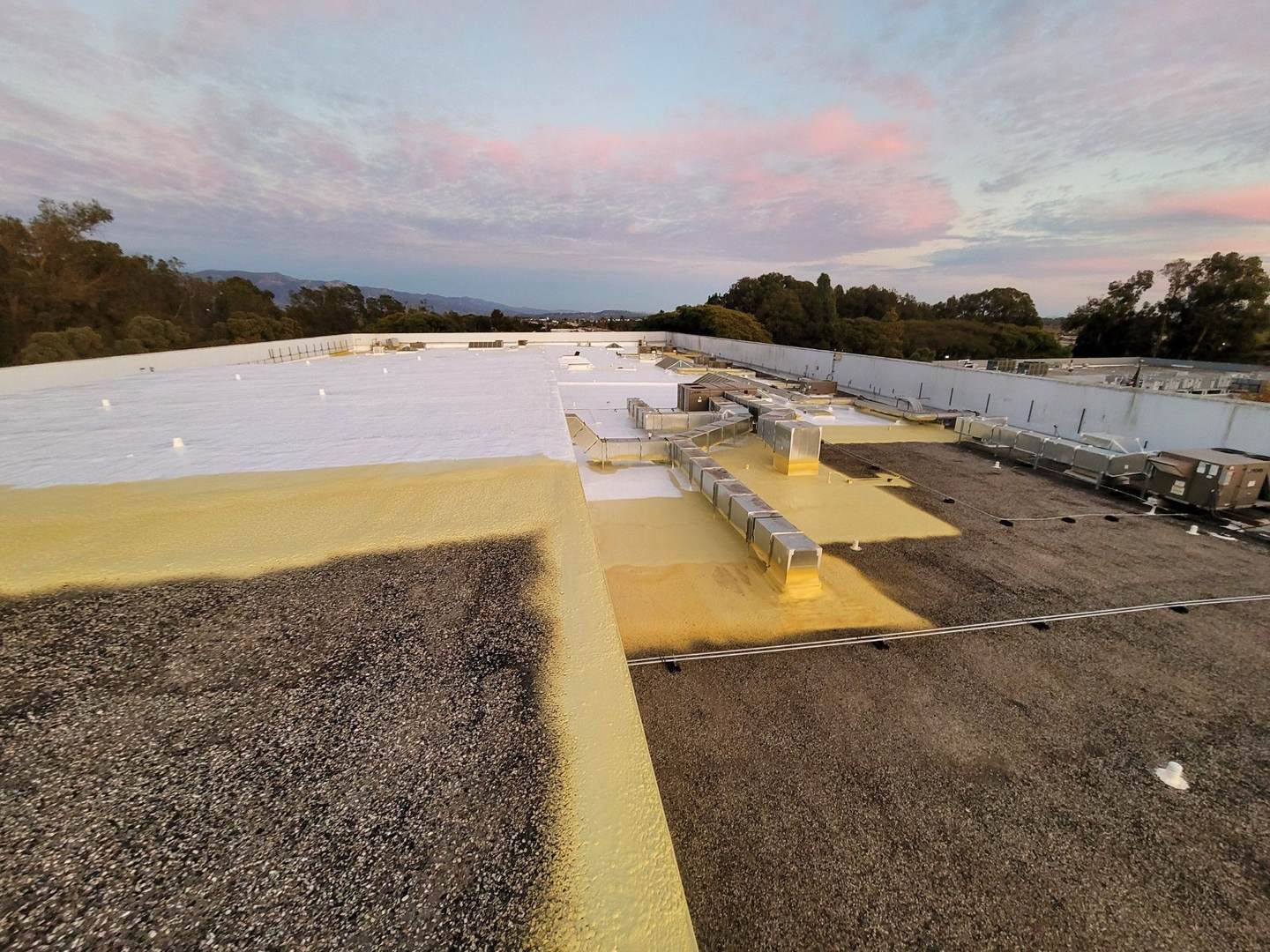
Spray foam over the old roof. Spray foam can go over many existing roofs, including old metal roofs and old gravel roofs. On a gravel roof, the loose gravel comes off, wet or damaged areas are cut out and repaired, and foam is sprayed over the top in one seamless, insulating layer, then coated.
A roof coating. On a roof that's aging but still sound, a silicone or acrylic roof coating can seal it and reflect the heat. Depending on the system, a coating can last in some cases up to 20 years, and it can be recoated later.
A TPO recover. TPO can sometimes go over the existing roof, depending on how many layers are already there.
Whichever option you choose, wet or damaged material comes out first. Foam never goes over wet insulation.
How we check whether your roof can be recovered
Count the layers. We find out how many roofs are already on the building. If it's at the limit, a tear-off is the answer.
Look for moisture. We check for wet insulation, soft spots and damaged decking, which have to be fixed before anything goes on top.
Check drainage and details. We look at how water moves off the roof and at the flashing around walls, curbs and drains.
Put the options in writing. You get a written, itemized estimate. When a recover makes sense we'll price it, and when a roof replacement is the better choice, we'll tell you why.
Pioneer Roofing does both recovers and full replacements on commercial roofing projects across Bakersfield and Kern County, so we have no reason to push one over the other. Call (661) 213-2203 to set up a look at your roof.
Need Help Deciding?
The best way to choose is with a professional roof inspection. A qualified commercial roofer can determine whether your building qualifies for an overlay—or if replacement is the smarter investment.
