What a roof coating does
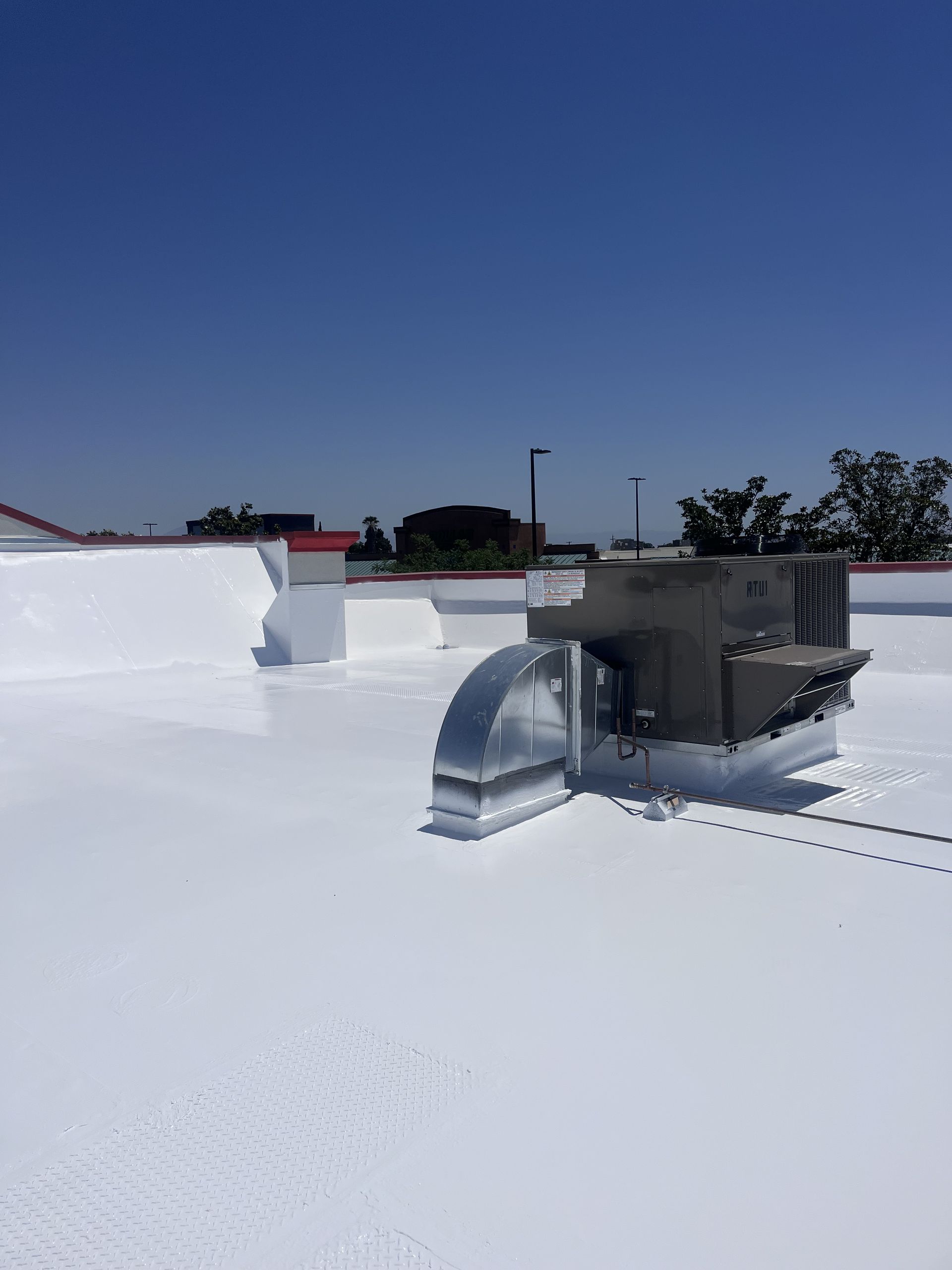
A roof coating is often the most affordable way to restore an aging flat or low-slope roof. It seals small leaks, reflects Bakersfield sun and can push back a full replacement. Depending on the coating and the roof, coating warranties can in some cases run up to 20 years.
- Seals the surface. The coating flows into small cracks, over seams and around penetrations, and cures into one continuous layer with no laps.
- Reflects heat. A bright white coating bounces back much of the sunlight that would otherwise bake the roof and the space under it.
- Shields what's underneath. On a spray foam roof, the coating is the layer that keeps the sun off the foam.
- Can be renewed. When a coating wears thin, the roof can often be cleaned and recoated instead of replaced.
What a coating won't do: dry out a roof that's wet underneath, hold together a roof that's falling apart, or fix a structural problem. Coating over trapped water just seals the problem in. That's why every coating job starts with a close look at the existing roof.
Silicone vs. acrylic: which coating fits your roof?
Both are good coatings. They're good at different things.
Silicone roof coatings
Silicone handles standing water better than acrylic, which makes it a strong choice for flat roofs with low spots where water sits after a storm. It also stands up well to strong sun. A few things to know:
- Once a roof has a silicone coating, future recoats generally need to be silicone too, because most other coatings won't stick to it.
- Silicone tends to hold onto dust more than acrylic, which can dull its bright white finish over time. In the valley, that's worth knowing.
- It usually costs more than acrylic.
Acrylic roof coatings
Acrylic coatings, often called elastomeric coatings, are water-based, bright white and highly reflective. They're a cost-conscious option for roofs that drain well, and they're one of the most common top coats on spray foam roofs.
- Acrylic doesn't hold up well under standing water, so it belongs on roofs without ponding.
- It's usually the lower-cost choice of the two.
The short version
- Water ponds on your roof after rain? Silicone is usually the better fit.
- Roof drains well and budget matters? Acrylic is often the sensible choice.
- Recoating an old coated roof? It depends on what's up there now. A silicone roof generally needs silicone again.
- Spray foam roof? Both are used over foam. We'll recommend one based on your drainage and your plans for the building.
We use trusted products like Mule-Hide silicone and acrylic coatings.
Roofs we coat
- Spray foam roofs. Every foam roof needs a coating, and every coating eventually needs renewing. We recoat and repair foam roofs installed by other contractors too, not just our own. See spray foam roofing.
- Previously coated roofs where the coating has gone chalky, thin, cracked or peeling.
- Old metal roofs. For leaking metal, we usually spray foam over the metal first and then coat the foam. That seals the seams and fasteners and adds insulation. See spray foam over metal roofs.
Not sure what kind of roof you have? That's normal. We'll figure out what's up there and tell you whether a coating makes sense.
Coatings and Bakersfield heat
A dark, weathered roof on a July afternoon in Bakersfield gets far hotter than the air around it, and that heat soaks down into the building. A white coating reflects much of that sunlight instead. For warehouses, packing sheds, shops and offices, a cooler roof surface can mean less heat pushing into the space below and less strain on the air conditioning.
California's Title 24 energy code can call for a reflective "cool roof" when a big share of a low-slope commercial roof is replaced or recovered. Whether it applies depends on your building and the scope of the work, and it gets confirmed during permitting. We pull the permits for our jobs and follow the cool-roof (Title 24) requirements that apply to your project. See Title 24 cool roofs.
Is your roof a good candidate for a coating?
A coating is usually a good fit when:
- The roof is mostly dry underneath.
- The problems are limited to worn areas, small cracks, seams and flashing that can be repaired first.
- The surface is still solid and firmly attached.
- You'd rather protect the roof you have than tear it off.
A coating is the wrong call when:
- Large areas of the roof are wet, soft or spongy.
- The roof is failing across most of its surface.
- The deck or structure has problems.
If a coating isn't right for your roof, we'll say so and walk you through the other options. See commercial roof restoration for how a coating restoration compares with a full replacement, or our commercial roof repair page if you're dealing with active leaks.
How a coating project works
- Roof evaluation. We check the existing roof, how it drains and whether there are wet or damaged areas.
- Written, itemized estimate. The scope, the coating we recommend and why, and the price, line by line. We pull the permits for the job.
- Repairs first. Damaged areas, open seams and bad flashing get fixed before any coating goes on. A coating is only as good as the roof under it.
- Cleaning and prep. The roof has to be clean and dry for the coating to bond.
- Coating. Rolled or sprayed on. Like any spray-applied roof system, it goes on in dry weather, so the schedule follows the forecast.
- Finished roof, with warranty. Warranty length depends on the coating and the roof; in some cases up to 20 years.
Helpful reading: Are silicone roof coatings worth it? · Reflective coatings and Title 24 · Commercial roof maintenance contracts
Roof coatings FAQ
How long does a roof coating last?
It depends on the coating, how thick it goes on, how well the roof drains and how it's cared for. Keeping it clean and fixing damage early helps it last. Warranty length depends on the coating and the roof; in some cases up to 20 years. We'll explain the warranty for your roof in your estimate.
Is silicone or acrylic better for a Bakersfield roof?
Neither one is better on every roof. Silicone handles ponding water better, and acrylic is a cost-conscious choice for roofs that drain well. We'll recommend one after looking at your roof's drainage, its current surface and your plans for the building.
Will a roof coating stop my roof from leaking?
It can, when the roof underneath is in decent shape. Leak areas, open seams and damaged flashing are repaired first, then the coating seals the whole surface. A coating can't save a roof that's soaked or failing all over.
Can you coat a roof that's already been coated?
Often, yes. A worn coating can usually be cleaned and recoated. If the existing coating is silicone, the new coat generally needs to be silicone too. We'll check what's on your roof first.
Do you recoat foam roofs other contractors installed?
Yes. We recoat and repair spray foam roofs installed by other contractors, not just our own.
Can you coat a metal roof?
Our usual approach on metal is to spray foam over it first and then coat the foam. That covers the seams and fasteners where metal roofs leak and adds insulation. The metal is checked first to make sure it's a good candidate.
How much does a roof coating cost?
It depends on the roof size, how much repair and prep it needs, the type of coating and how thick it goes on. We give free written, itemized estimates. Call (661) 213-2203.
Can you coat the roof while we're open?
Yes. We can schedule coating work around your business hours and on occupied buildings, and we'll plan the job with you ahead of time.
Get a free roof coating estimate
Send us the address, the rough size of the roof if you know it, and what's going on: leaks, a worn-out coating or a building that's too hot. We'll get back to you to set up a time to take a look.
Serving all of Kern County and nearby areas, plus larger projects elsewhere in California. Reflective coatings earn their keep wherever the sun is hardest, and in Kern County that's everywhere from Bakersfield and the valley towns to Ridgecrest and the desert side of the county. From our Bakersfield office at 6321 Almond Dr, we serve Bakersfield, Oildale, Shafter, Wasco, Delano, McFarland, Arvin, Lamont, Tehachapi, Taft, Frazier Park, Lake Isabella, California City, Ridgecrest and Buttonwillow. Call (661) 213-2203 to ask about your location. See all service areas.
Pioneer Roofing · 6321 Almond Dr, Bakersfield, CA 93308 · (661) 213-2203 · 8 a.m.–5 p.m. daily (Mon–Sun), on call after hours · Pioneer Roofing · Licensed & Insured · CA License #976470
Related: Commercial roofing · Spray foam roofing · Silicone roof coatings · Acrylic roof coatings · Commercial roof repair · TPO roofing