Commercial Roof Leak in Bakersfield? What to Do First
W water starts coming through the ceiling of a store, office, warehouse or shop, what you do in the first hour matters more than anything else. Bakersfield doesn't get much rain, so a lot of commercial roofs go months without being tested. Then the first real storm of the season finds every weak spot at once. Here is what to do right away, where flat commercial roofs around here usually leak, and what a proper commercial roof repair involves.
First: protect people and property
Keep people away from the wet area. Water near lights, outlets or ceiling fixtures is a safety hazard. If it is safe to do so, shut off power to that area, and call an electrician if you aren't sure. Sagging ceiling tiles can hold a surprising amount of water, so don't stand under them.
Move inventory, equipment and records out of the way. Put down buckets, a tarp or plastic sheeting to catch the water.
Take photos and short videos. Get the ceiling, the water and anything that got wet. Dated photos help with insurance, and they help the roofer understand what happened.
Write down when it leaks. Only in heavy rain? Only when the wind blows from one direction? Hours after the rain stopped? When the air conditioning is running? Sometimes what looks like a roof leak is an AC condensate line or a plumbing vent, and those details help track it down.
Don't send anyone up on the roof during a storm. A wet roof is slippery, and walking on a soft, wet roof can make the damage worse.
Call a roofer. Pioneer Roofing's office hours are 8 a.m. to 5 p.m., seven days a week, and someone is on call after hours at (661) 213-2203.
Where commercial roofs in Bakersfield usually leak
Water rarely comes in right above the spot where it shows up inside. It can get in at a seam, run along the deck or insulation, and drip out of a light fixture twenty feet away. These are the usual suspects on Kern County commercial roofs:
Flashing around HVAC units. Almost every commercial building here has rooftop units, and the flashing around their curbs takes a beating from the heat and from service traffic.
Seams and laps. On TPO, other single-ply roofs and older roll roofing, seams open up as the roof ages and moves with the heat.
Parapet walls. Cracks in the top of a parapet wall or along the roof edge let water get behind the roofing.
Drains and scuppers. Dust, leaves and debris pile up all summer. When the first storm hits, water backs up and sits on the roof. Our post on commercial roof drainage problems covers the warning signs.
Old openings and penetrations. Abandoned swamp cooler openings, old vents and pipes that were patched over instead of properly closed up.
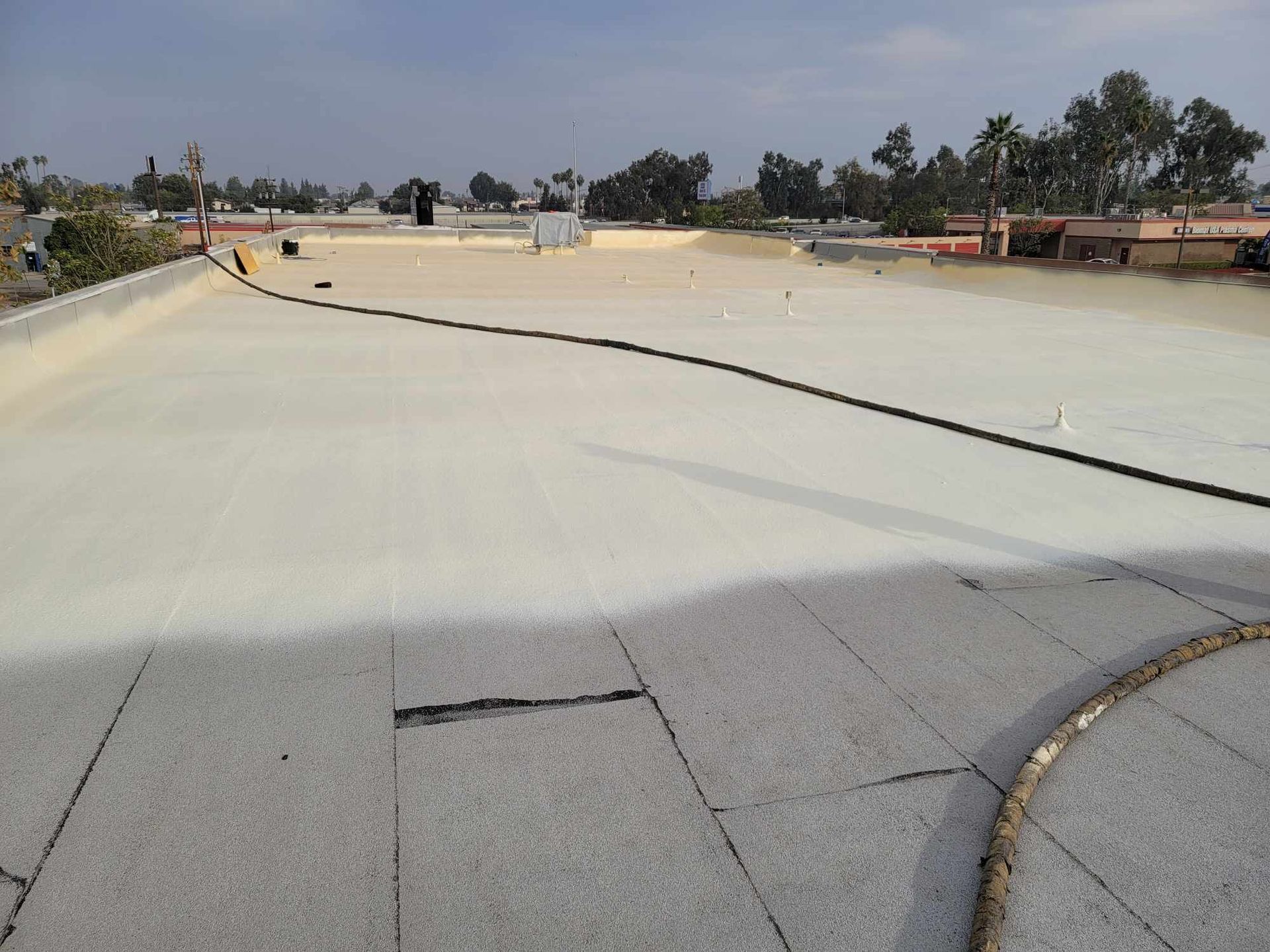
Worn coatings on foam roofs. When the coating on a spray foam roof wears thin, the sun starts breaking down the foam underneath. Bare spots and blisters are the warning sign.
Fasteners on metal buildings. Over the years, screws back out and their washers dry out and crack.
What a proper repair visit looks like
Inspection. We look at the roof surface, the leak from inside, and the places water is most likely getting in, not just the spot above the drip.
Temporary protection if needed. In an emergency we tarp the roof to help limit damage until the repair can be made.
A written repair plan. You get what we found, what we recommend and what it costs, in writing.
The permanent repair. That can mean new flashing, seam repairs, resealing penetrations, closing up old openings, clearing and fixing drains, or recoating worn areas.
Repair, recoat or replace?
One leak doesn't automatically mean you need a new roof. The right answer depends on the condition of the whole roof:
Repair makes sense when the leaks are isolated and the rest of the roof is in good shape.
Recoat or restore is often the answer when the roof surface is aging but the roof is dry underneath. A roof coating or spray foam over a sound roof can add years without a tear-off. We use Mule-Hide silicone and acrylic coatings, and depending on the system a coating can last in some cases up to 20 years. Foam can even go over many old gravel roofs.
Replacement is the better choice when the insulation is soaked, the deck is damaged, or repairs keep failing. A coating over wet insulation just traps the water. In that case a new roof, such as a TPO roof, may be the better investment. Our post on roof replacement vs overlay goes into more detail.
If a storm caused the damage, we can help with your insurance claim.
Preventing the next leak
Most commercial roof leaks start small. A few habits catch them early:
Have the roof looked at twice a year: in the fall before the rainy season and in the spring after it. Catching a problem during a roof inspection is far cheaper than replacing a ceiling, inventory or equipment.
Keep drains and scuppers clear, especially after windy, dusty stretches.
Check the roof after HVAC work. Service techs walk the roof and open panels, and flashing can get damaged.
Keep the coating on foam roofs in good shape. Recoating on schedule is much cheaper than repairing damaged foam.
For buildings where a leak would shut down business, a commercial roof maintenance plan puts those checks on a schedule. We offer maintenance plans for commercial roofs, so ask about one when we look at your roof.
Get your commercial roof leak fixed
Pioneer Roofing handles commercial roof leaks for businesses across Bakersfield and Kern County, on spray foam, coated, TPO, metal and older flat roofs. We give free, written, itemized estimates. Pioneer Roofing · Licensed & Insured · CA License #976470. Call (661) 213-2203 or request a free estimate.
