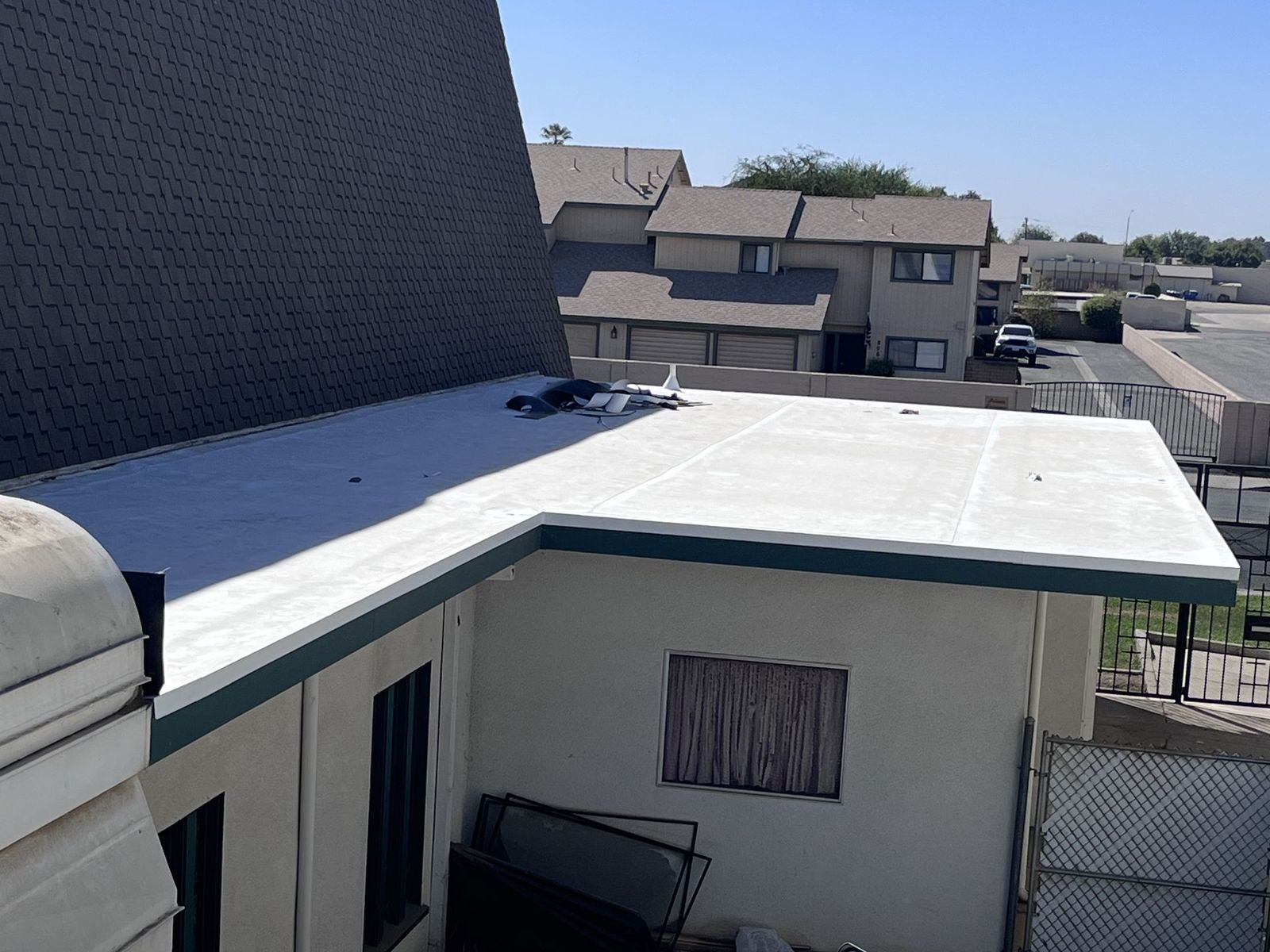
Commercial Roof Drainage Problems in Bakersfield, CA
Protect Your Building From Costly Water Damage
A commercial roof is one of the most important investments a business owner can make. While many property owners focus on roofing materials and structural integrity, the drainage system plays an equally important role in protecting the building from water damage.
When a commercial roof drainage system stops functioning properly, water can accumulate on the roof, leading to leaks, structural deterioration, mold growth, and expensive repairs. Identifying drainage issues early can help business owners avoid major disruptions and extend the life of their roofing system.
At Pioneer Roofing, we help commercial property owners throughout Bakersfield and Kern County identify and resolve roofing issues before they become costly problems.
Why Commercial Roof Drainage Matters
Commercial roofing systems are designed to direct water away from the roof surface efficiently. Whether your property has internal drains, scuppers, gutters, or downspouts, every component must work together to prevent standing water and moisture intrusion.
A properly functioning drainage system helps:
Prevent roof leaks
Reduce structural stress
Protect insulation and roofing materials
Minimize mold and mildew growth
Extend the lifespan of the roof
Reduce long-term maintenance costs
Even though Bakersfield receives less rainfall than many parts of California, seasonal storms and unexpected heavy rain can quickly expose weaknesses in a drainage system.
Common Signs Your Commercial Roof Drainage System Is Failing
1. Standing Water on the Roof
One of the most obvious warning signs is ponding water that remains on the roof more than 48 hours after a rainstorm.
Standing water can:
Weaken roofing materials
Increase the likelihood of leaks
Add excess weight to the roof structure
Accelerate membrane deterioration
If water consistently pools in the same areas, there may be a drainage design issue or a blockage preventing proper water flow.
2. Overflowing Drains or Water Running Over Roof Edges
Water should move efficiently through drains and away from the building. If you notice water spilling over roof edges or overflowing drain openings during rainstorms, the system may be partially blocked or undersized.
Common causes include:
Debris buildup
Clogged drain baskets
Damaged drainage components
Inadequate drainage capacity
Ignoring these issues can lead to water intrusion and damage to exterior walls.
3. Water Stains Inside the Building
Water stains on ceilings, walls, or around light fixtures often indicate moisture is entering through the roofing system.
While leaks can originate from several sources, poor drainage is frequently a contributing factor. Excess water trapped on the roof can eventually find weak points and penetrate the building envelope.
4. Mold, Mildew, or Algae Growth
Moisture that remains trapped around drains or low areas creates ideal conditions for mold and algae growth.
Signs may include:
Dark discoloration near drains
Musty odors
Visible mildew growth
Deteriorating roofing materials
These issues not only affect the roof but can also impact indoor air quality if left untreated.
5. Sagging Roof Areas
A sagging section of roof may indicate prolonged water accumulation. Over time, trapped moisture can weaken decking and structural components.
If you notice uneven surfaces, depressions, or areas that appear lower than the surrounding roof, a professional inspection should be scheduled immediately.
Common Causes of Commercial Roof Drainage Problems
Clogged Drains and Debris Accumulation
Leaves, dirt, trash, and wind-blown debris can block drains and prevent water from flowing properly.
Routine maintenance and cleaning are essential for keeping drainage systems operating efficiently year-round.
Improper Roof Slope
Flat commercial roofs are never truly flat. They are designed with a slight slope to guide water toward drains.
If the roof was poorly designed or has settled over time, water may collect in low spots instead of draining properly.
Undersized Drainage Systems
As buildings age or undergo renovations, the original drainage system may no longer provide adequate capacity during heavy rainfall events.
A roofing professional can evaluate whether additional drains, scuppers, or drainage upgrades are needed.
Damaged Drain Components
Cracked drain bowls, deteriorated flashing, separated seams, and damaged piping can all compromise drainage performance and lead to leaks.
How to Inspect Your Commercial Roof Drainage System
While a professional inspection is recommended, property owners and facility managers can perform basic visual checks.
Look for:
Standing water after rain
Debris around drains
Visible damage to drains and scuppers
Water stains on interior ceilings
Signs of mold or algae growth
Sagging roof sections
Documenting these issues can help roofing professionals identify the root cause more quickly.
Repairing Commercial Roof Drainage Problems
The right solution depends on the severity of the problem.
Potential repairs may include:
Cleaning and clearing drains
Repairing damaged drain components
Correcting roof slope issues
Installing additional drainage points
Replacing deteriorated roofing materials
Upgrading the drainage system for improved performance
Addressing drainage concerns early is often far less expensive than repairing extensive water damage later.
Schedule a Commercial Roof Inspection in Bakersfield
A failing roof drainage system can cause significant damage long before leaks become visible inside your building. Regular inspections and preventative maintenance help identify problems early and protect your investment.
Pioneer Roofing provides professional commercial roofing inspections, maintenance, repairs, and drainage solutions throughout Bakersfield and surrounding communities. Our experienced team can evaluate your roofing system, identify drainage concerns, and recommend cost-effective solutions to keep your property protected.
Contact Pioneer Roofing today to schedule a commercial roof inspection and ensure your drainage system is working properly year-round.
Frequently Asked Questions
What causes standing water on a commercial roof?
Standing water is typically caused by clogged drains, poor roof slope, structural settling, or inadequate drainage design. Professional inspections can determine the exact cause and recommend the appropriate solution.
How often should commercial roof drains be inspected?
Most commercial properties should have roof drains inspected at least twice per year and after major storms. Regular maintenance helps prevent blockages and costly water damage.
Can poor drainage shorten the lifespan of a commercial roof?
Yes. Poor drainage can accelerate material deterioration, increase the risk of leaks, and contribute to structural damage, ultimately reducing the lifespan of the roofing system.
When should a commercial roof drainage system be replaced?
Replacement may be necessary when drains are severely damaged, undersized, or unable to effectively manage water flow. A professional roofing assessment can determine whether repair or replacement is the best option.
