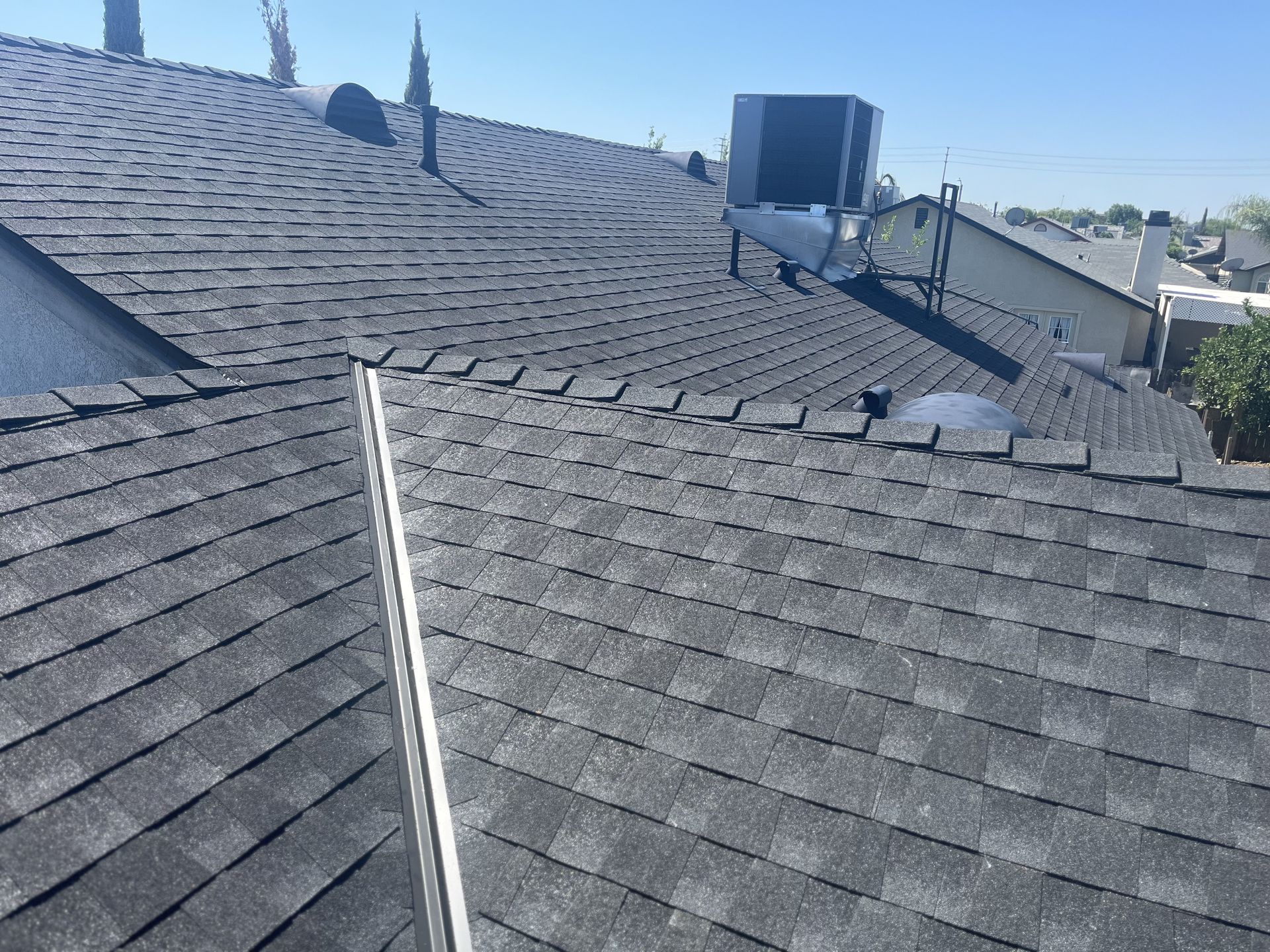
Removing a Swamp Cooler? Close the Roof Opening Right
Evaporative "swamp" coolers have cooled Bakersfield and Kern County homes for generations. As more homeowners switch to central air, or an old cooler finally quits, the cooler comes off the roof. What it leaves behind is a hole in your roof, and how that hole gets closed decides whether you have a dry ceiling for years to come or a slow leak that shows up as a stain next winter.
What's left on the roof when the cooler comes off
The duct opening. Usually a large square hole through the roof deck, where the cooler's duct dropped down into the attic.
The stand or platform. A wood or metal stand that was often bolted or strapped through the roofing.
Holes from straps, bolts and supports scattered around where the stand sat.
Water, drain and electrical lines. These should be shut off, disconnected and capped by a qualified person before any roof work starts.
Years of patches. Layers of roof tar and old flashing built up around the cooler.
Worn roofing and soft decking. Coolers drip and overflow. The area under and around one often has stained, soft or rotted decking from years of water.
Why a quick patch doesn't last
The fastest fix is a piece of plywood screwed over the hole and covered in roof tar. It may hold for a season. Then the problems start:
Tar dries out and cracks in the Bakersfield sun, and water gets in at the edges.
Plywood that isn't supported on all sides sags, and water collects in the low spot.
Shingles laid over a raised patch don't lie flat, so wind lifts them and rain gets under them.
Soft or rotted decking around the opening gets left in place and keeps getting worse.
On tile roofs, broken or mismatched tiles around the patch let water through to the underlayment.
The usual result is a slow leak that nobody notices until a ceiling stain appears months later.
How we close a swamp cooler opening the right way
We always close up the opening. Whether the old stand or curb comes off depends on the roof and the job, and we check that during the inspection, before any work starts.
Inspect the opening and the stand. We look at the opening, the old stand or curb, and the decking around them for rot or soft spots, and we tell you what we found and what we plan to do.
Frame and deck the opening. We add framing so the new decking is supported on every edge, then install new decking flush with the existing roof deck. Any soft decking nearby gets replaced too.
New underlayment. Underlayment goes over the repaired area and laps into the existing underlayment so water sheds the right way.
Roofing to match. On a shingle roof, new shingles are woven into the existing ones and matched as closely as possible. On a tile roof, we lift and relay the surrounding tile over new underlayment and replace broken pieces. On a flat or low-slope roof, we close it up with TPO or a roof coating tied into the existing roof.
Seal holes that are no longer used. Old strap and bolt holes that aren't needed anymore get sealed so they don't turn into leaks of their own.
One honest note: on an older shingle roof, an exact color match may not be possible. Shingles fade over the years and colors get discontinued. We'll show you the closest option before we start.
Patch now, or close it up with a new roof?
If your roof is already near the end of its life, it often makes more sense to close up the cooler opening as part of a roof replacement. You pay for the work once, and the whole roof matches. A typical home re-roof takes about three days, and warranty length depends on the product, typically 20 years. If the roof still has good years left, a proper patch is the right call. A roof inspection will tell you which one you're looking at. For more on timing a new roof, read planning a roof replacement in Bakersfield.
Keeping your swamp cooler?
The flashing around a cooler stand and its duct is one of the most common leak points on older homes. If you are keeping the cooler, we flash and seal around the stand and duct as part of a re-roof or a roof repair. Between visits, keep an eye out for two things: an overflow or drain line that dumps water onto the roof, and rust or standing water under the unit.
Don't forget the ceiling
Closing the roof opening takes care of the outside. Inside, the old cooler vent in your ceiling still needs to be closed up, which is drywall or HVAC work rather than roofing. Plan for both so you don't end up with a sealed roof and an open hole in the hallway ceiling.
Swamp cooler removal and roof repair in Bakersfield
Pioneer Roofing works on homes across Bakersfield and Kern County, from older neighborhoods in Oildale and East Bakersfield to newer homes in the southwest. If you are taking out a cooler, tell us when you call and we'll include closing up the opening in your free, written estimate. Our crew includes Spanish speakers. Hablamos español. Call (661) 213-2203 or request a free estimate. More on our residential roofing work.
